
Mike Childs 25 Feb 2026
Increasing flood risk in the UK and worldwide
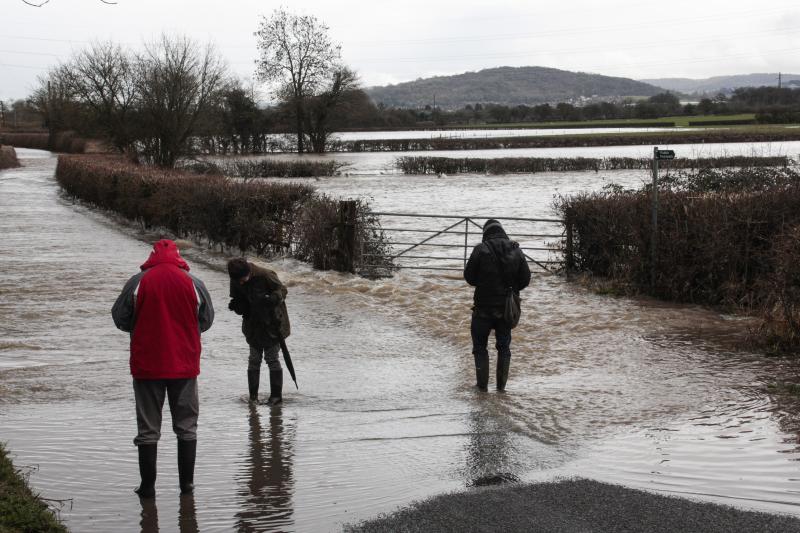
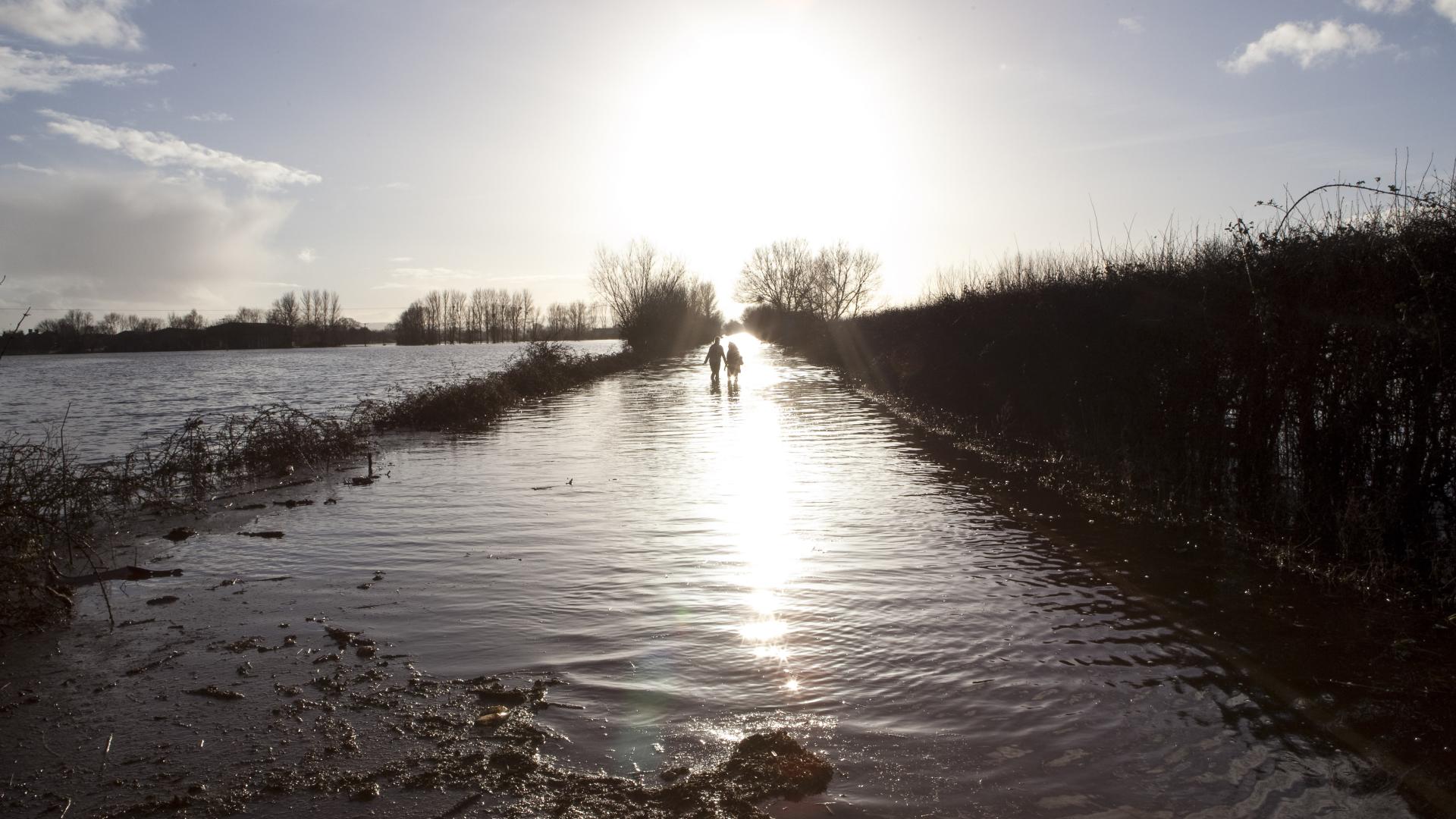
Around the world, the weather is becoming windier, wetter and more chaotic - just as climate scientists predicted. Here in the UK, the Met Office’s State of the Climate Report says it’s now 10% wetter than in the second half of the last century (1961-1990 average). Six of the ten wettest winters since records began more than 250 years ago have been in the 21st century.
Sea levels are also rising faster. Since 1901, the sea level around the UK has risen by about 19.5 cm, with two-thirds of this rise happening just over the last three decades.
Wetter winters and rising seas are a result of climate change and rising temperatures. Sea levels rise with the addition of meltwater from icecaps and glaciers, but seawater also expands when it's warmer. Rainfall increases and becomes more intense because warmer air holds more moisture before it releases it (7% more intense for each degree of warming).
It’s inevitable that we’ll see more floods in the future. Climate scientists have warned we may even have already crossed polar ice sheet tipping points, that would “eventually commit the world to several meters of irreversible sea level rise”. If carbon emissions keep accelerating, extreme rainfall events could be around three times as frequent by 2080 across England, compared to the 1980s.
Friends of the Earth has carried out an in-depth analysis of Environment Agency data on flooding from rivers, seas and surface water. There are currently 1.82 million properties at high risk of flooding from one or more of these sources - of which around one million are residential (home to around 2.4 million people). High risk is the chance of a flood once in 30 years or less. In the future many or all the 1.33 million properties that currently have a medium risk of flooding – once in 100 years - will move to the high risk category, of which 800,000 are residential (affecting 1.8 million people). And these numbers exclude flooding from groundwater, for which the Environment Agency is yet to publish data.
Curbing carbon emissions reduces the risk of more extreme flooding in the future. It’ll reduce the significant physical, emotional and financial impacts from flooding, recently documented by the British Red Cross, which are exacerbated when people are already experiencing socio-economic disadvantage. It’ll also reduce the hardship and economic damage flooding causes to businesses and farming. Yet despite the predicted impacts and increasing costs of flooding, some politicians and lobbyists are short-sightedly opposing policies that cut emissions.
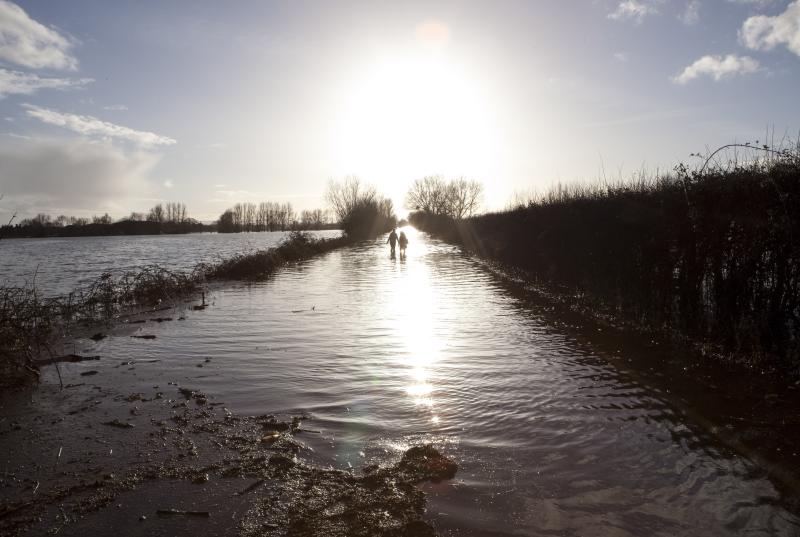
Defences deteriorating
The Environment Agency data assumes that those flood defences that do exist are in good condition. The vast majority (93%) are but that still leaves many that aren’t. The Environment Agency is investing more on flood defence maintenance but also points out that more extreme weather takes its toll on the condition of flood defences and related infrastructure, such as pumping stations.
UK neighbourhoods most at risk of flooding
Some geographical areas are at greater risk of flooding than others and some people in these locations are at greater risk than others. Using the Environment Agency data, Friends of the Earth has mapped the proportion of properties at high risk (at least once in 30 years) of flooding from either rivers, seas or surface water for every neighbourhood in England.
Visit the interactive map to see the risk of flooding near you.
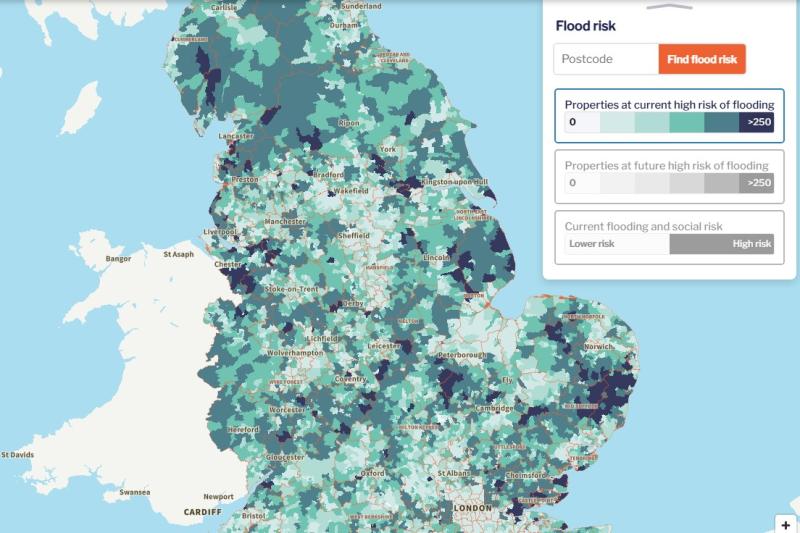
All parliamentary constituencies have properties and people at risk of flooding. Within the top 20 parliamentary constituencies with the greatest number of residential properties at high risk of flooding – those of MPs David Lammy (Labour), David Davis (Conservative) and Richard Tice (Reform UK) all feature in the top 10.
Likewise all local authorities have properties and people at risk of flooding. The top 20 list of local authorities with the highest number of residential properties at high risk of flooding is topped by Kensington & Chelsea. The Mayoral area with most residential properties at high risk is Greater London.
The league tables are in the appendix (the full dataset is available here).
Enhanced social risk neighbourhoods
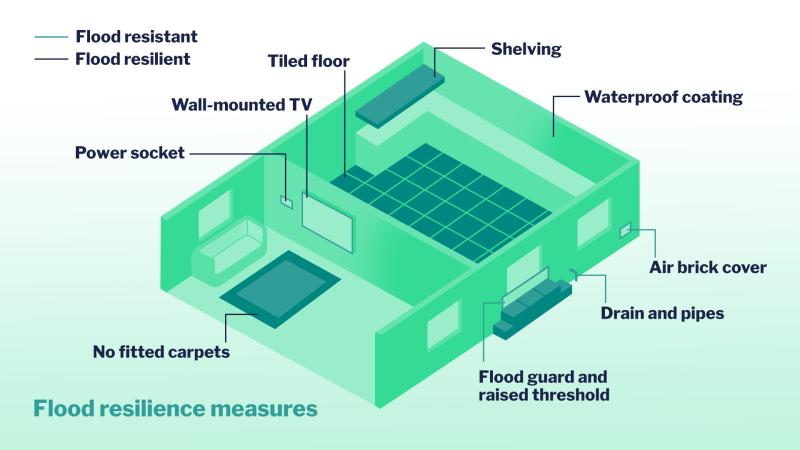
Funding for adaption should be substantially increased. Funding can also be better targeted to areas of greatest need. We have carried out a further analysis to identify high priority neighbourhoods for flood adaptation spending (e.g. funding measures in houses to resist flood water, such as self-closing air bricks, and investing in flood defences).
From all the neighbourhoods that have a high risk of flooding, we have identified a subset where more than 5% of residential properties are at risk. And within this subset of neighbourhoods, we have further identified which have the greatest proportion of people who are least able to prepare in advance of flooding (renters, low-incomes), respond when flooding occurs (over 75s, people with disabilities), or recover afterwards (those without insurance, low-income, lone-parents and single pensioners). We have called these high flood risk:high social risk neighbourhoods. More detail on the methodology can be found in the appendix.
There are 2,718 high flood risk:high social risk neighbourhoods, 8.1% of England’s 33,755 neighbourhoods (as defined by the Office of National Statistics). 611,000 people live within these -it’s an environmental injustice that many of these people will have contributed least to climate change.
In the appendix we also include top 20 lists for the parliamentary constituencies and local authorities which have the greatest number of people living within these high flood risk:high social risk neighbourhoods. Those of MPs David Lammy, David Davis and Richard Tice again feature. Barking and Dagenham tops the local authority list. Greater London is the Mayoral area with the greatest number of people living in high flood risk:high social risk neighbourhoods.
What has the UK government done about increased flood risk?
In the 2025 Spending Review the government increased spending on flooding with a 10-year £7.9 billion capital investment programme into new flood defences, alongside £4.2 billion over the three years from April 2026 (with some double-counting). It stated that around £8 of damages are prevented for every £1 invested in flood defences. However, it’s unlikely that this investment is enough to keep up with increasingly extreme weather. The Environmental Audit Committee has recommended that funding is increased to £1.5 billion per year (i.e. to £15 billion over 10 years).
The government said it wants greater emphasis on natural flood management and more focus on protecting deprived communities. Yet its guidance only says that at least 20% of funding should go to the 20% most deprived areas at risk of flooding, which it admits will only “ensure that deprived areas receive at least the same share of funding as their weight in the population”. And on Natural Flood Management it only commits £300 million over 10 years which, although an increase on previous spending, is only 4% of total spending.
As mentioned above, it has also committed additional funding for repairing flood defences.
Building on flood plains
It is still too easy to build new homes on flood plains despite recent changes that include a requirement for permissions to be referred to a government Minister if above 10 dwellings or 0.5 hectares.
One in nine new homes were built in flood risk areas between 2022 and 2024, exposing a “worrying” rising trend, analysis shows. The analysis carried out by insurer Aviva reveals that 11% of the 396,602 new homes in England built over the period were built in areas of medium or high risk of flooding, while more than a quarter (26%) have some flood risk.
Aviva warned its analysis, based on new homes address data and the Environment Agency’s latest assessment of flooding risk at a constituency level, showed a rising proportion of new homes are being built in flood risk areas. And in the first half of 2024, more than 1,000 properties were granted permission to build in flood-prone areas, according to a report funded by insurer Allianz. Householders living in these properties aren’t eligible for reduced cost insurance - unlike people living in properties built before 2009 in flood prone areas.
Flash flooding
Insurer Zurich identified in 2023 that “disadvantaged communities will bear the brunt of climate-fuelled flash flooding”. Unfortunately the government pulled back from making standards to reduce the amount of rainwater that runs-off from new infrastructure development mandatory (e.g. by requiring the use of permeable surfaces and rainwater collection). It’s this surface water run-off that exacerbates flash flooding. The government’s limited measures to restrict developments in flood plains doesn’t even cover areas at risk of surface water flooding, only flooding from rivers and seas.
Householders without insurance
Because flooding will increase from all sources – rivers, seas, surface water and groundwater - a functioning insurance system is essential. The UK’s flood reinsurance policy (Flood Re, regulated by the government) caps the price of flood insurance depending on council tax banding (e.g. £233 for Band C properties) and regardless of flood risk. However, many households in flood prone areas will still be without insurance. Recent polling by the Financial Conduct Authority found two thirds (67%) of renters did not have contents insurance compared with just one in ten (11%) homeowners. It also found take-up rates were even lower among renters in ethnic minority groups (80+%) and among low-income households (75% of adults in households with an income of less than £15,000 a year).
Can nature restoration help?
Nature restoration can help protect land and properties from flooding and reduce but not eliminate the need for flood defences, such as walls and barriers. This ‘natural flood management’ approach is increasingly recognised as a vital tool for flood defence. The Environment Agency has synthesized research into natural flood management and concluded that it works and almost always achieves multiple environmental benefits. Its research also provides numerous examples of these natural flood management approaches in action. Examples of natural flood management include:
Restoring peatlands and soils
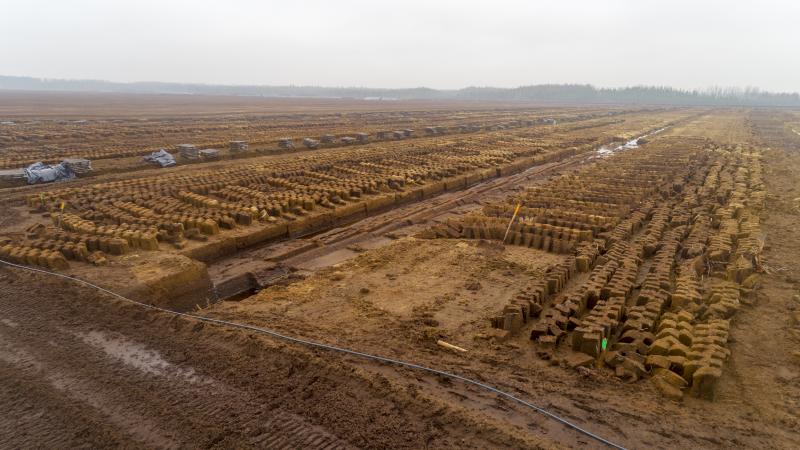
Upland peatlands can act as giant sponges soaking up rainfall and releasing it slowly over time. But many of these peatlands have been degraded through drainage to make the habitat more suitable for rearing grouse for shooting or for the horticultural industry. Restoring peatlands and other soils also aids wildlife and the storage of carbon.
Planting more trees
England is one of Europe’s least wooded nations. More of the right trees in the right places will help reduce flood risk by slowing the flow and enabling soils to absorb more water. Forest Research has estimated that trees provide £400 million a year worth of flood protection in Great Britain. The last government’s England Trees Action Plan aimed to plant more woodlands beside rivers and waterways but funding for the plan was a fraction of what’s needed. The new government has promised a new plan in 2026. Trees can also provide ready material for installing leaky dams - branches across a stream holding back much of the water but allowing it to drain through the leaky dam over time.
Creating more water storage capacity
The uplands and the lowland floodplains can store the large volumes of water that come with storms. Well managed floodplains can also be a haven for wildlife. This would only require losing very small amounts of agricultural land. Water can be stored by building more ponds and lakes and in urban areas storm water can be stored in water butts, including potential Wi-Fi enabled water butts that empty ahead of a storm.
Restoring the natural flow of rivers
Many rivers have sections where their flow has been unnaturally straightened and/or concreted riverbanks have been installed. This can speed the river flow and cause flood risks further downstream. Natural and restored riverbanks act as sponges by absorbing excess water and river meanders can store more water.
- Bringing back beavers – they are brilliant engineers and another natural ally in cutting flood risk, by building dams and reducing the volumes of water reaching communities downstream. A University of Exeter study shows how beavers increased water retention on the land reducing risk of flooding downstream.
- Increasing soak-away capacity – much of our urban areas have been concreted over. As surface water flooding is the greatest risk in many areas it makes sense to prevent the creation of more hard surfaces and replacing existing built-over surfaces with more porous materials where practicable.
- The National Infrastructure Commission has called for more action on sustainable drainage.
Examples of where natural flood management has been practised include:
- Forest of Dean: beavers reintroduced to the area are helping flood-proof and restore the land.
- Holnicote, Somerset: small scale measures across the catchment by the National Trust are holding water on the land and slowing its release and flow.
- Pickering, north Yorkshire: a combination of tree planting and leaky dams of woody debris is slowing the flow to reduce the risk from potential flood waters.
- Hebden Bridge, west Yorkshire: community group Treesponsibility has planted 250,000 trees across nearby valleys and hillsides. Woody "leaky" dams installed by Slow the Flow Calderdale are slowing the flow of water downstream.

Friends of the Earth policy demands
Friends of the Earth wants to see:
- The UK’s National Adaptation Plan updated. In its 2025 adaptation report, the government’s official climate change advisors, the Climate Change Committee, warned: “The UK’s preparations for climate change are inadequate. Delivery of effective adaptation remains limited and, despite some progress, planning for adaptation continues to be piecemeal and disjointed. [...] The Government must act without further delay to improve the national approach to climate resilience.” This is true for both flooding and extreme heat.
- Ensure local authorities and emergency services have the resources they need to support those most at risk during flooding events. Disabled people, elderly people and lone parents particularly face challenges in evacuating properties during floods, as well as significant challenges during the recovery period. Local authorities and the emergency services need properly resourcing so that they can properly plan for, safeguard and rescue those most a risk. There have been too many instances of disabled and elderly people not being properly supported during flood events. The Fire and Rescue Service wants and needs a statutory duty to responding to flooding incidents that pose a risk to life, alongside funding to deliver on it. Local authorities don't have enough staff or funding to properly contribute to flood prevention or to help communities respond and recover.
- Taxes on fossil fuel companies to fund increased spending on flood protection, reduce the costs of flood insurance, and ensure homes built after 2009 can get affordable cover. Insurance companies could also contribute, as greater flood resilience would reduce future payouts. According to analysis by the Association of British Insurers (ABI), insurers paid out £585 million for claims relating to weather-related damage to people’s homes and possessions in 2024, which is £77 million more than the previous record in 2022. Some insurance companies voluntarily contribute to flood defence costs but understandably complain about other insurers freeloading on their investments.
- Increased spending on flood defences and increased housing resilience in the 2,718 neighbourhoods where the flood risks are highest and the population least able to prepare, respond and recover. The government’s new flood spending guidance that the 20% most deprived areas should get at least 20% of spending falls well short of what would be a just and appropriate response to a grave environmental injustice.
- Natural flood management supported but not at the expense of necessary hard defences, such as flood barriers. Examples of natural flood management include restoration of peatlands and sea marshes, tree planting, reintroduction of beavers in upper catchments, restoring rivers stuck in concrete culverts, increasing green spaces and water storage areas in urban areas, and removal of hard surfacing to enhance drainage. The government has committed to increase funding for these measures but spending levels are still inadequate. Spending needs to be increased or these, including on maintenance, but not at the expense of necessary hard defences as both are needed.
- More affordable insurance. Flood Re enables affordable insurance for many in flood-prone areas but the cap needs to be lower for Bands A and B Council Tax homes. The £250 excess on claims for flooding also needs to be removed, as recommended by Flood Re. The Environment Agency, councils, insurance companies and Flood Re also need to increase the awareness of flood risk in flood-prone areas. Many households do not take out insurance, being unaware of the level of risk. As post-2009 housing isn’t covered by Flood Re, it needs to be as it risks creating uninsurable flood ghettos - but this will require additional funding. And as it’s currently planned that the Flood Re scheme will come to an end in 2039, flood prone areas will face significantly higher insurance costs after this date ,to the significant detriment of lower-income households unable to pay. The Environmental Audit Committee has rightfully called for the development of a successor to Flood Re (Flood Re 2.0 or similar).
Appendices
Appendix 1- tables

Appendix 2 - methodology and data sources
Methodology
Assessing properties and population at risk of flooding by LSOA
A Unique Property Reference Number (UPRN) and postcode spine was first created using the National Statistics UPRN Lookup (NSUL). Properties in the Risk of Flooding from Surface Water (RoFSW) dataset were identified using individual UPRN coordinates and the RoFSW flood extent maps, and these were joined to the UPRN/postcode spine.
Most properties in the Risk of Flooding from Rivers and Seas (RoFRS) dataset have a UPRN, but around 10% do not. For these properties, OS Open TOID coordinates were used to identify the nearest postcode, which allowed their locations to be assigned and appended to the UPRN/postcode spine.
Properties with high and medium flood risk from either RoFRS or RoFSW were then identified, and counts by risk level were summarised at postcode level. Total properties, population, and households from Census 2021 postcode-level data were appended, and the proportion of properties at risk was calculated for each postcode.
The proportion of properties at risk was used to estimate the population at risk, assuming the same distribution of population across all properties within each postcode. The number of residential properties at risk was estimated using the ratio of households to total properties.
At LSOA 2021 level, flooding risk was summarised to show, for high and medium risk categories, the number and proportion of all properties, the number of residential properties, and the estimated population at risk. Medium risk today was assumed to represent future high risk under a climate change scenario[1], so high risk statistics were labelled as “current high risk” and medium risk statistics as “future high risk”.
Assessing community ability to prepare, respond and recover from flooding
The social resilience analysis is structured into three domains that describe different aspects of how communities are affected by, and can cope with, flooding.
- The ability to prepare domain captures factors that influence how far people can anticipate and plan for flooding, including income, housing tenure and levels of education, which can affect access to information, resources and options.
- The ability to respond domain reflects characteristics that may limit how quickly and safely people can act during a flood, such as disability, older age, household structure and English language proficiency.
- The ability to recover domain focuses on the capacity to bounce back after a flood, combining deprivation, insurance coverage, tenure and unemployment, which together influence financial security and access to support.
Each indicator was calculated as a percentage (for example, the percentage of households renting their homes) and normalised to a value between 0 and 1, with the highest percentage transformed to 1 and the lowest to 0.
Indicators were then summed within each domain (ability to prepare, ability to respond, ability to recover) to create a domain score for every LSOA.
Domain scores were normalised and combined to produce an overall flooding social resilience score.
LSOAs were split into three equal groups (tertiles) based on this score, with the highest scoring group identified as the most socially at risk or least resilient to flooding impacts.
Combining flooding risk and social risk, and categorising neighbourhoods
The LSOA-level flood risk data was combined with the social risk and resilience data.
LSOAs were classified as having current high flooding risk if at least 5% of residential properties were at high risk of flooding.
A further group of LSOAs was identified as having future high flooding risk where at least 5% of residential properties had a medium (future high) level of flooding risk.
Using the social risk data, LSOAs were then assigned to one of five categories:
- Current high flooding risk and high social risk (current flood risk is high and the LSOA is in the top third of LSOAs with highest social risk/least resilience)
- Current high flooding risk and lower social risk
- Future high flooding risk and high social risk
- Future high flooding risk and lower social risk
- Lower flooding risk (where high or medium flood risk was estimated to affect fewer than 5% of residential properties)
Data sources
Assessing properties and population at risk of flooding by LSOA
- Risk of Flooding from Rivers and Seas (RoFRS) – Properties in Areas at Risk
- Risk of Flooding from Surface Water (RoFSW) – map showing flood extent by risk band (high, medium, low)
- National Statistics UPRN Lookup (NSUL, November 2025), Open Geography Portal: https://ckan.publishing.service.gov.uk/dataset/national-statistics-uprn-lookup-november-2025-epoch-122
- Postcode resident and household estimates, England and Wales: Census 2021: https://www.nomisweb.co.uk/sources/census_2021_pc OS
- Open UPRN, OS Data Hub: https://osdatahub.os.uk/data/downloads/open/OpenUPRN
- OS Open TOID, OS Data Hub: https://osdatahub.os.uk/data/downloads/open/OpenTOID
- ONS Postcode Directory (August 2025), Open Geography Portal: https://geoportal.statistics.gov.uk/datasets/295e076b89b542e497e05632706ab429/about
- AIMS Spatial Flood Defences (including standardised attributes): https://www.data.gov.uk/dataset/cc76738e-fc17-49f9-a216-977c61858dda/aims-spatial-flood-defences-inc-standardised-attributes
Assessing flood defences at LOSA level Flood defence data was intersected with LSOA boundaries to identify, for each neighbourhood, the number and total length of flood defences and their condition where assessments had been made. These summary data were appended to the LSOA-level flood risk dataset.
- AIMS Spatial Flood Defences (including standardised attributes): https://www.data.gov.uk/dataset/cc76738e-fc17-49f9-a216-977c61858dda/aims-spatial-flood-defences-inc-standardised-attributes
- Lower Layer Super Output Areas (December 2021) Boundaries EW BFC (V10), Open Geography Portal: https://geoportal.statistics.gov.uk/datasets/ons::lower-layer-super-output-areas-december-2021-boundaries-ew-bfc-v10-2/about
Assessing community ability to prepare, respond and recover from flooding
- Ability to prepare Low income: Income Deprivation Domain score from the English Indices of Deprivation 2025: https://www.gov.uk/government/statistics/english-indices-of-deprivation-2025
- Renting: RM201 – Tenure by age, Census 2021: https://www.nomisweb.co.uk/datasets/c2021rm201
- Educational attainment: TS067 – Highest level of qualification, Census 2021: https://www.nomisweb.co.uk/datasets/c2021TS067
- Ability to respond Disability: TS038 – Disability, Census 2021: https://www.nomisweb.co.uk/datasets/c2021ts038
- Population aged 75 years and over: Small area population (2021-based) by single year of age: https://www.nomisweb.co.uk/query/construct/summary.asp?reset=yes&mode=construct&dataset=2014&version=0&anal=1
- Single pensioners and lone parents: TS003 – Household composition, Census 2021: https://www.nomisweb.co.uk/datasets/c2021ts003
- Language isolation: TS029 – Proficiency in English, Census 2021: https://www.nomisweb.co.uk/datasets/c2021ts029
- Ability to recover Low income: Income Deprivation Domain score from the English Indices of Deprivation 2025: https://www.gov.uk/government/statistics/english-indices-of-deprivation-2025
- Insurance cover modelling, estimated at LSOA level using: Financial Lives 2024 Survey, FCA – data tables on insurance coverage by demographics (national): https://www.fca.org.uk/financial-lives/financial-lives-2024#data-tables
- Tenure: RM201 – Tenure by age, Census 2021: https://www.nomisweb.co.uk/datasets/c2021rm201
- Unemployment rate: TS066 – Economic activity status, Census 2021: https://www.nomisweb.co.uk/datasets/c2021ts066
[1] The Environment Agency publishes flood risk maps for a future climate change scenario, but coverage is incomplete and does not yet extend to all parts of England. Testing a sample of current medium-risk postcodes showed that most were classified as high flooding risk under the future climate change scenario where data was available. On this basis, medium risk today was assumed to represent future high risk under a climate change scenario.