

Sandra Bell03 Feb 2026
It’s imperative to challenge disinformation to ensure that the actions taken now, and those needed in the future, are not undermined.
The threat of halting action to mitigate the impacts of climate breakdown is already here. Some councils under Reform UK control have already scrapped important climate plans and targets.
This article looks at what’s causing high energy bills in the UK, why high bills can’t be blamed on support for renewables and recommends fair solutions to make energy more affordable.
Disinformation about energy bills
Richard Tice has blamed rising energy bills on support for renewable energy saying that "The British people need to know there is a direct link between the cost of all these subsidies to the vested interests in the renewables industry and your bills,"
He also claimed Reform could lower bills by ending subsidies to renewables. "We're saying, on behalf of the taxpayer, we claim that back to consumers with lower bills that lower the cost of living," He said he’s given "formal notice" in a letter to renewables companies that Reform UK intends to scrap the Contracts for Difference (CfD) scheme.
In its manifesto Reform UK says that it would “Scrap Annual £10 Billion of Renewable Energy Subsidies” and instead tax renewables. It claims that “Our bills have increased dramatically in line with the huge increase in renewables capacity over the last 15 years”.
Conservative leader Kemi Badenoch has promised to set out a “cheap power plan” which she claims would “scrap the carbon tax on electricity and axe Labour’s wind and solar levy, slashing bills by £165 for households”.
Gas prices drive high energy bills in the UK, not renewables
Wind power is already cutting bills - and our reliance on gas.
While it’s true that energy prices are high in the UK compared to average European prices, it’s wrong to blame a rise in our bills on the increase of energy supplied by renewables. The increase in gas prices spiked after Russia invaded Ukraine and energy prices have remained high ever since.
As Kaylen Camacho McCluskey of the UK Energy Research Centre (UKERC) says “While the story of what has driven up GB consumer electricity bills is often largely attributed to policy costs, our analysis shows that this is not the case. Volatile, gas-linked market prices – not green policies, as some misleading claims have suggested – dominate the real-terms increase in bills since 2021.”
The UK has been particularly exposed. 90% of the time expensive gas sets the wholesale electricity power prices - unlike in other European countries. The EU average was just over 40% in 2023. Electricity makes up the majority of a typical user's energy bill. The greater the proportion of renewable energy reduces the proportion of time when expensive gas sets the price. In fact, wholesale prices could have been about 46% higher without British wind farms. The UKERC says that a significant increase in renewables – such as the significant increase in offshore wind already planned - means that gas would only set wholesale power prices 60% of the time by 2029, cutting our exposure to “gas price shocks”.
New renewable energy is as cheap or cheaper than new gas-fired power stations
The cost of electricity from new offshore wind is similar to that of new gas-fired power stations (excluding a carbon levy put on gas), whereas onshore wind and solar are significantly cheaper. The cost of building offshore wind has increased over recent years, but so has the cost of building new gas-fired power stations. Unlike gas, renewable energy doesn't contribute to climate change which is already causing expensive damage to the UK’s building, infrastructure, businesses and economy. Climate breakdown also costs lives.
Continued investment in renewables, particularly onshore wind and solar, will mean cheaper energy production. Even more importantly, it can reduce the UK’s exposure when volatile global gas prices soar during conflicts around the world.
More drilling in the North Sea won’t cut bills.
Drilling for more oil and gas in the North Sea, as proposed by Reform UK and some Conservative politicians, would not cut bills for UK households. Any new production would be sold on global markets - which set the price. What’s more, the most productive and economically valuable days of the North Sea are in the past. What remains is difficult to extract and would certainly not be a quick fix. The economic viability of new fossil fuel extraction in the UK would
only be possible with massive state support, so the extraction companies would profit while ordinary taxpayers shoulder the burden.
Energy bills include contributions to help insulate homes and boost renewables but they're not the main driver of prices
Various environmental and social ‘policy costs’ are added to our bills by the government, but these only account for around 13% of an average household dual energy bill (£236 a year). The government is reducing this by £150 after April 2026, including scrapping the Energy Company Obligation, which supported energy efficiency measures for low-income households. The wholesale cost of electricity accounts for 40% of our bills, the cost of maintaining and upgrading the gas and electricity networks accounts for 22% and 16% is for energy supplier operating costs.
After April 2026, the environmental and social costs that remain include the cost of the Warm Homes Discount – this gives a £150 energy rebate to 6 million low-income homes and will account for almost £40 of energy bills per household. In addition, energy bills will include almost £40 of subsidies for renewable energy, historical legal commitments which will reduce over time.
The role that environmental and social policy costs play in high energy bills has been exaggerated - it suits the narrative of some politicians to blame ‘green’ measures. And the proportion of bills that goes on social and green levies will be even smaller from April 2026. (This proportion is less than 5%, of which under a fifth is the cost of supporting new renewable energy). Even with this reduction we think it would be better to fund these environmental and social costs through general taxation.
Scrapping support for renewables would increase costs – there's better ways to bring energy bills down
Cutting support for new renewable energy, as proposed by Reform UK, would make little difference to energy bills. In theory, it could reduce bills by a bit less than 1% by removing environmental levies. However, in practice, this would be counterproductive as it would result in higher bills. Without continuing to support renewables, the cost of energy would be set by expensive gas more of the time.
As well as supporting renewable energy, Friends of the Earth has also argued for greater investment in insulation. Analysis shows that people living in the lowest energy efficiency homes - Energy Performance Certificate (EPC) rating band F - will pay £570 more per year (on dual-fuel bills i.e. bills covering both gas and electricity) compared to a home with EPC C rating. The UK government has now published the Warm Homes Plan, which includes £5 billion to help councils and social landlords install insulation and clean energy like solar panels. It is also setting minimum energy efficiency standards from private-rented sector homes. These are welcome, but more funding is needed.
Cutting carbon taxes isn't a realistic answer to cutting household bills
The Conservatives claim that they’ll significantly lower household bills by scrapping the carbon tax doesn’t add up. There’s 2 carbon taxes. The largest of these - the Emissions Trading Scheme - couldn’t be scrapped without EU agreement as it’s part of the UK-EU Trade Deal and getting such an agreement is highly unlikely. The Carbon Price Support only costs householders £10 a year - this could be scrapped but doesn’t bring the scale of savings claimed.
Why this matters
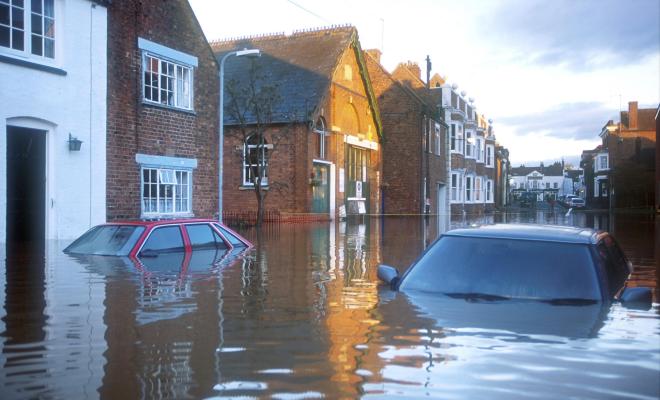
Reversing climate action by blocking new renewable energy projects is dangerous and would exacerbate inequalities. There’s clear evidence that the impacts of climate change are already happening around the world and are being felt in the UK. It’s often the people who’ve done least to cause it who suffer. For example, UK households on low incomes are less likely to be adequately covered by contents insurance so are more financially vulnerable to flooding events.
The transition to a low carbon economy will cost money, but it can be funded fairly by ensuring that the biggest polluters pay the most. Those with the most to lose are often the most vociferous opposition to climate action - and who stand to benefit most when doubt is sown about the urgent need for it. There are significant benefits to clean energy that can improve the quality of day to day lives - such as cleaner air, thriving nature, new jobs and warmer homes.
Cutting investment in UK renewable energy and investing in fossil fuels would increase our reliance on imported energy, put us at the mercy of volatile gas prices and would do nothing to help people struggling to pay their energy bills.
Fair solutions
In the face of disinformation being spread by national, regional and local right-wing politicians, it’s legitimate to ask who would benefit from the UK rowing back on its climate commitments and continued investment in fossil fuels. It’s clear who loses out - weakening of climate action would hit ordinary people hard in terms of direct impacts like flooding. Backtracking on climate action would also mean losing out on positive measures to improve bus services, insulate homes and provide a cheaper and more secure home-grown supply of energy.
Scrapping renewable support doesn’t remove costs — it swaps cheap, predictable energy for expensive, volatile energy, and households pay the difference. Instead, we need:
- Continued investment in renewables.
- Policy costs on bills to be shifted from bills to general taxation.
- Polluter Pays taxes to raise additional money for insulation and other energy efficiency measures.
- Increased investment in insulation and other energy efficiency measures.
- The introduction of a Social Tariff – so low-income qualifying households are offered a discounted rate on energy bills.