
Sandra Bell14 Jan 2026
Disinformation is the presentation of partial or false information with the deliberate intention of misleading someone.
This is one of a series of fact checkers exposing the disinformation spread by some politicians about climate breakdown. It is imperative to challenge the spread of misinformation to ensure that the actions taken now, and are needed in the future, aren’t undermined. The threat of halting action to mitigate the impacts of climate breakdown is already here. Some councils under Reform UK control have already scrapped important climate plans, targets and commitments to act.
This article looks at the economic arguments in favour of climate action and why an ideologically driven argument to overturn all net zero policies make no sense.
Why this matters
Reversing climate action would be dangerous and would exacerbate inequalities. There’s clear evidence that the impacts of climate change are already happening across the UK and the world and it’s often the people who’ve done least to cause it who suffer. In the UK, households on low incomes are less likely to be adequately covered by contents insurance and so are more financially vulnerable to flooding events.
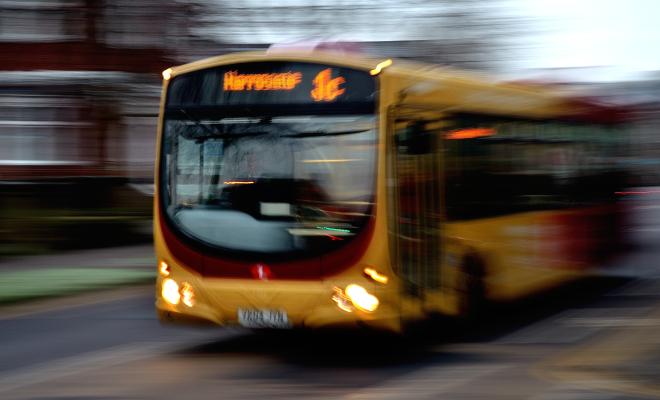
The transition to a low carbon economy will cost money but it can be funded fairly by ensuring that the biggest polluters pay the most. Those with the most to lose are often the most vociferous opposition to climate action and who stand to benefit most when doubt is sown about the urgent need for it. There will have to be changes to our lives and the places we live - but there are significant benefits that can improve the quality of our day to day lives such as cleaner air, better bus services, thriving nature, new jobs and warmer homes.
Denying climate change is out of sync with the concerns of British people. Even though concern about climate change has slightly decreased in recent years as concerns about global conflict and cost-of-living rise, the majority of Britons (77%) still say they are concerned about climate change.
The world’s scientists agree that human activity is causing climate change
The world’s scientists agree that human activity is causing virtually all of the changes to climate experienced over the last 150 years. The Intergovernmental Panel on Climate Change (IPCC) is the United Nations body with responsibility for assessing the science of climate change and it brings together 195 member governments and thousands of scientists from around the world.
It has concluded that “It is unequivocal that human influence has warmed the atmosphere, ocean and land. Widespread and rapid changes in the atmosphere, ocean, cryosphere and biosphere have occurred”. The IPCC points out that each of the last four decades has been successively warmer than any decade that preceded it since 1850.
The IPPC also confirms that the rise in CO2 is being caused by humans: “Emissions of CO2 from fossil fuel combustion, with contributions from cement manufacture, are responsible for more than 75% of the increase in atmospheric CO2 concentration since pre-industrial times. The remainder of the increase comes from land use changes dominated by deforestation (and associated biomass burning) with contributions from changing agricultural practices. All these increases are caused by human activity”.
Examples of disinformation about climate science
Reform UK’s Mayor of Greater Lincolnshire, Dame Andrea Jenkyns has said “do I believe that climate change exists? No”. She also claimed that “carbon dioxide is not pollution”.
Reform UK’s Nottinghamshire County Councillor, Bert Bingham told a council meeting that "Anthropogenic global warming is a hoax" saying that data has been manipulated and people “brainwashed” and declaring a climate emergency was "absolutely ridiculous and nonsensical". "They'll have us back living in mud huts - if even living at all - by the time they're done."
Two councillors at Reform UK-led Kent County Council put forward a motion to rescind the council’s climate emergency declaration which questions whether climate change is anthropogenic and making several statements without scientific basis such as “a warming world should not be seen as a bad thing”.
Nationally Reform UK removed some of its denial of the science from its draft Manifesto before the final version was published. In 2024 Farage stated in an interview “I’m not going to have any debate on the science” but added: “All I do know is that man produces about 3 per cent of the CO2 produced in the world every year, and that it is nuts to call CO2 a poison”.
Similarly Reform UK deputy leader Richard Tice said in 2025 that humans have "possibly" impacted the climate, but only "modestly" having previously said that human made climate change is “garbage”.
The impacts are real
Climate breakdown is having devastating impacts on communities around the world. It's extremely irresponsible for any politician to ignore the impacts of climate change and even more so to suggest that a warming world “should not be seen as a bad thing”. We are already seeing the devastating effects of climate change in the extreme weather events that are impacting communities in the UK and around the world.
Climate change is increasingly making extreme heat, droughts and flooding more severe across the UK. In 2022, extreme heat caused more than 4,500 excess deaths in England. Older people, pregnant women, and babies are at greatest risk from extreme heat, as are people in care homes and hospitals. Some neighbourhoods are more prone to over-heating than others.
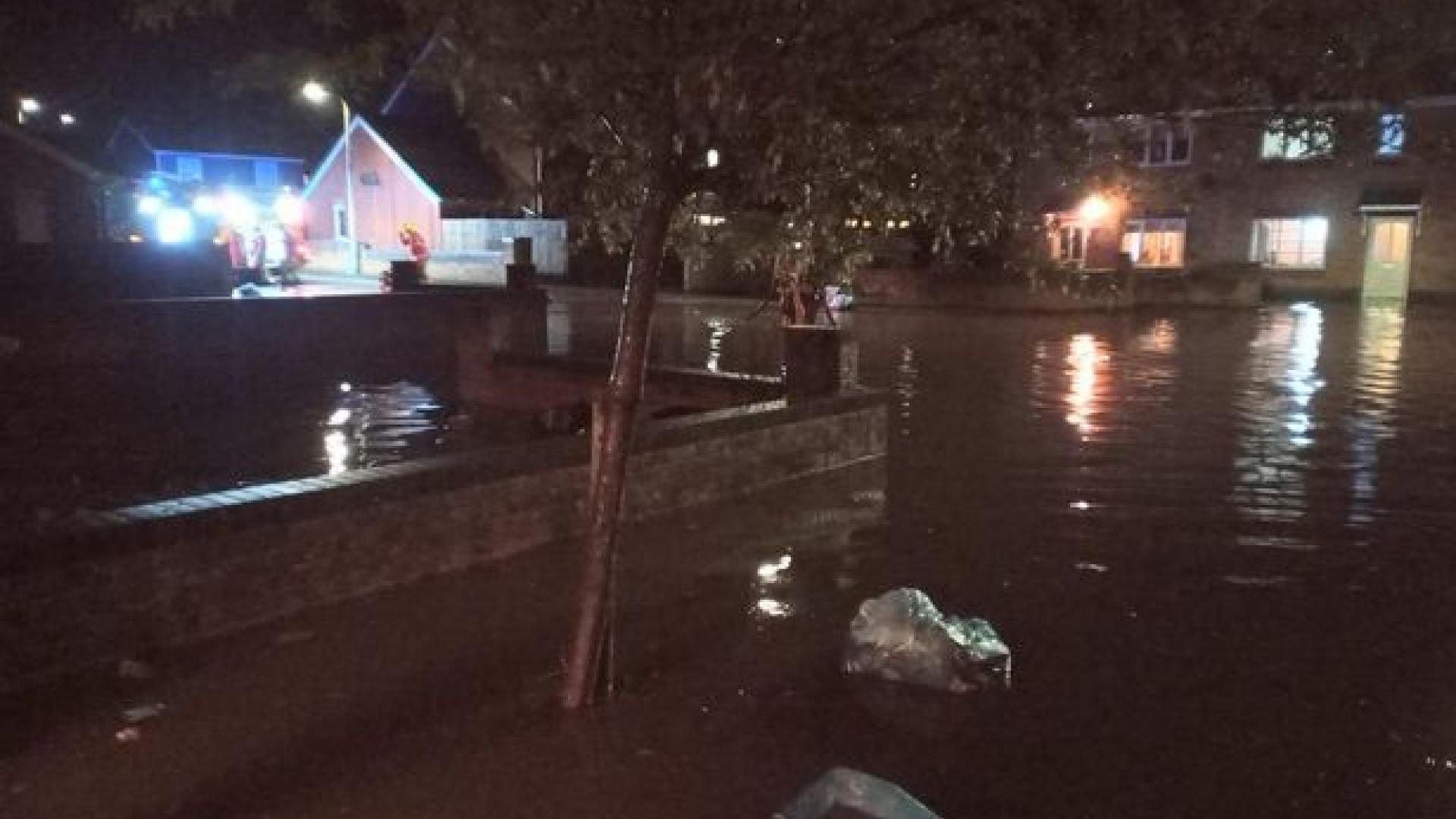
Similarly some areas are more at risk of flooding. Richard Tice’s constituency in Lincolnshire is one of the areas most at risk of flooding in the UK. Kent county council is rejecting action to tackle climate change but there are around 75,000 properties in Kent and Medway that are at risk of river and coastal flooding with many more at risk of surface flooding. In June 2025, patients were advised to stay away from a Kent hospital due to flash floods.
Extreme rainfall that triggered deadly flooding across West Africa in 2022 was made about 80 times more likely by human-caused climate change . The flooding killed more than 800 people in Nigeria, Niger, Chad and other neighbouring countries between June and October. In Nigeria alone, the floodwater displaced 1.3 million people.
Catastrophic floods in south-east Asia in 2025 killed at least 1,500, with Indonesia, Sri Lanka and Thailand most affected. The areas also faced food and clean-water shortages after the floods. These floods have been attributed to climate change combined with decades of deforestation that enabled the water to flow faster. The Red Cross Asia-Pacific director said the floods were a “stark reminder that climate-driven disasters are becoming the new normal”.
Scientists have clearly linked the increases in extreme weather to human caused climate change. The IPCC refers to the increase in heatwaves, heavy precipitation, droughts, and tropical cyclones and to the increasing certainty that these are attributable to human activity.
In addition to the deaths that are directly attributed to extreme weather events, climate breakdown is impacting on people’s wellbeing, putting them at greater risk of disease and reducing their ability to grow food.
Fair Solutions
In the face of disinformation being spread by national, regional and local right-wing politicians it’s legitimate to ask who would benefit from the UK rowing back on its climate commitments and continued investment in fossil fuels. It’s clear who loses out - weakening of climate action would hit ordinary people hard in terms of direct impacts like flooding. Backtracking on climate action would also mean losing out on positive measures to improve bus services, insulate homes and provide a cheaper home-grown supply of energy.
Friends of the Earth is pursuing solutions to climate change that are fair so that everyone benefits and the costs fall on those with the broadest shoulders including:
A strong adaptation plan to protect against existing and predicted climate impacts that focuses on the people most vulnerable to those impacts.
A robust and fair strategy to reduce the UK’s emissions in line with our existing legal commitments.
A fair contribution from the UK to the costs of mitigation and adaptation globally.