
Sandra Bell19 Feb 2026
It’s imperative to challenge disinformation to ensure that the actions taken now, and those needed in the future, are not undermined.
The threat of halting action to mitigate the impacts of climate breakdown is already here. Some councils under Reform UK control have already scrapped important climate plans and targets.
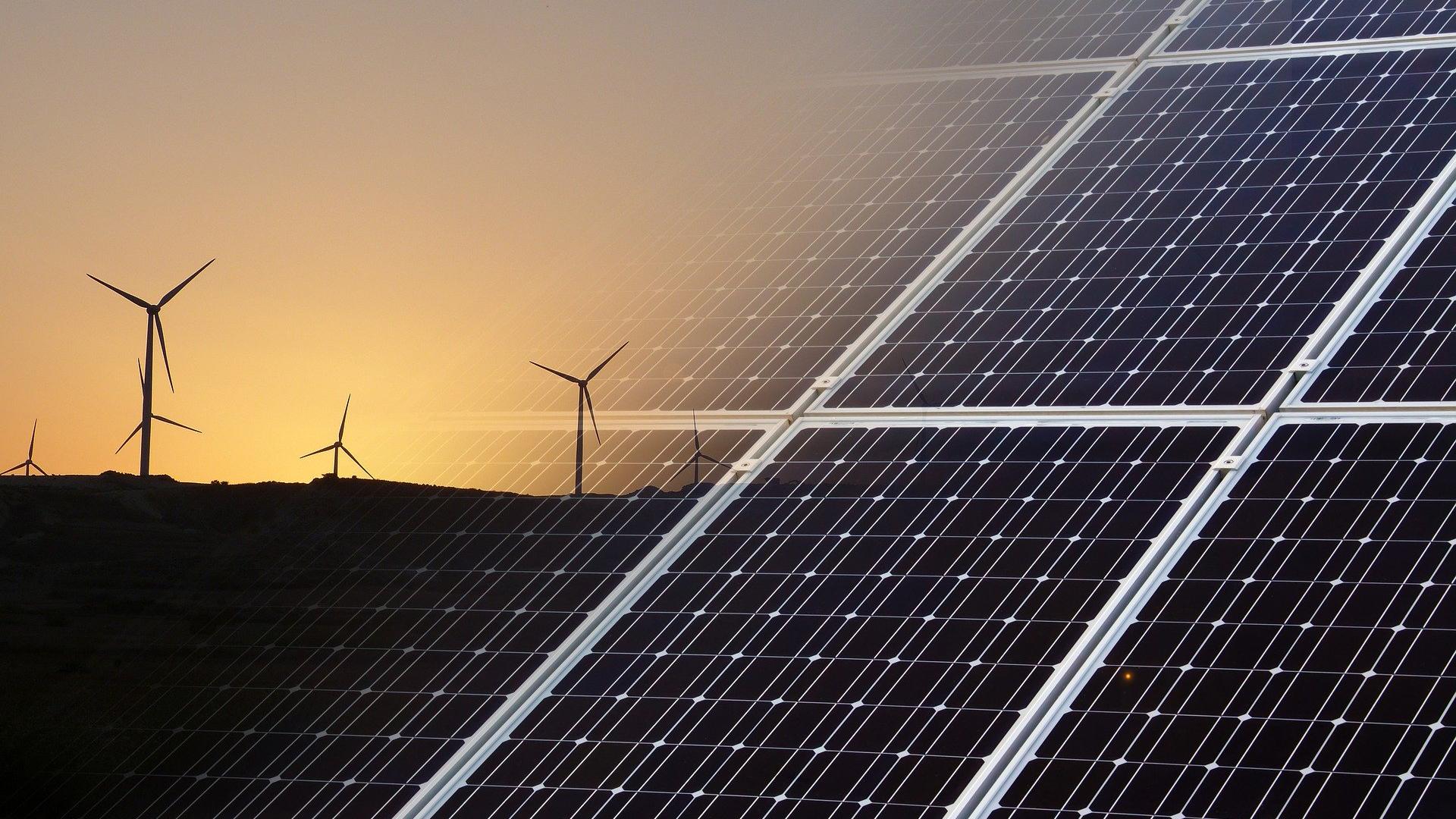
This article looks at how solar and wind farms are an important part of the renewables mix needed to deliver clean, cheap energy and how in the right locations, they can coexist with food production and be a welcome additional source of income for farmers.
As with any large, new infrastructure project these developments can be controversial. But planning processes are there to consider objections and ensure the right developments are in the right place. There’s no justification for a wholesale rejection of new renewable energy projects in the countryside, as touted by some right-wing politicians.
Disinformation about the impact of solar and wind farms
Reform UK’s farming policy states that “Britain's farmers are the lifeblood of our country and backbone of our food security, but they have been pushed to breaking point by Whitehall diktats. Pursuit of net zero at any cost has led to productive farmland being littered with solar panels and wind farms”.
Reform UK mayor for Greater Lincolnshire Andrea Jenkyns has said she wants to, "unleash the spirit of Lincolnshire" against "the planned desecration of our countryside". The mayor said: "We are the bread basket that feeds Britain, so I ask why would any government put our nation's food security in jeopardy because of mass-scale solar farms?".
In Claire Coutinho’s Conservative Party conference speech she said that “To generate the same amount of power as a nuclear power station, you would need a wind farm the size of the New Forest, or a solar farm the size of the Isle of Wight. On a small island like ours where every inch of countryside is precious, that matters. So instead of carpeting the countryside in wind and solar farms, we will make it easier and cheaper to build dense, reliable, secure, clean nuclear energy”.
Conservative MP Dr Caroline Johnson says “Of course, Lincolnshire is the bread basket of the country and it’s important that we don’t cover the best of the land that we’ve got in the country in solar farms.” Dr Johnson said that small module nuclear reactors would generate “more energy in much smaller areas” and would avoid solar panels being put on some of the “best farmland” in the country.
Although there are examples of politicians from the other main parties opposing local wind farm and solar farm proposals, these have been objections to specific projects. They're not calling for a wholesale halt to the roll out of solar and wind energy in the countryside.
Solar and wind farms won't impact on UK food security
Offshore wind has the potential to do the heavy lifting to meet the UK’s clean energy targets - but we’ll still need plenty of onshore wind and solar power. This doesn’t mean that there’s a threat to food production.
When Friends of the Earth analysed locations with the best potential for solar farms, we excluded the highest quality agricultural land. We still found enough land for a significant increase in solar and onshore wind – exceeding the targets set by the government. It’s true that some solar farms might need to be located on high value farmland, because of proximity to grid connections, for example. But it’ll be a very small proportion of land and certainly not pose any threat to food security. In practice, some land that’s designated as “excellent” or “very good” may be degraded and therefore be suitable for development.
Solar UK has estimated that the government’s target for 70 GW of solar by 2035 would take up less than 1% of UK farmland. They also point out that “even with five times as many solar farms deployed around the UK, they would still occupy less land than the amount currently occupied by golf courses”.
In Lincolnshire where Reform UK and Conservative politicians have talked about mass scale solar farms threatening food production, the county council says that the total of land that’ll be used for approved solar farms is 3,500 ha, with a further 6,400 ha proposed but not yet approved. If all the currently proposed solar farms are approved, the total used would be close to 10,000 ha but this is still only around 2% of the farmland of Lincolnshire, which is around 490,000 ha.
All proposals will be considered on a case-by-case basis, taking into account the impact on productive farmland. The planning process protects the best quality agricultural land requiring new developments to be located on poorer agricultural land where possible and avoiding the use of 'Best' and 'Most Versatile' agricultural land. This consideration applies both to smaller renewable projects decided by the local planning authority and larger scale proposals that are decided by the Secretary of State, through the Nationally Significant Infrastructure Projects process.
Solar farms do not take agricultural land out of production permanently. Planning permission for a solar farm is time limited. Installations can be completely dismantled at the end of their operation and the land fully returned to food production.
Using land efficiently
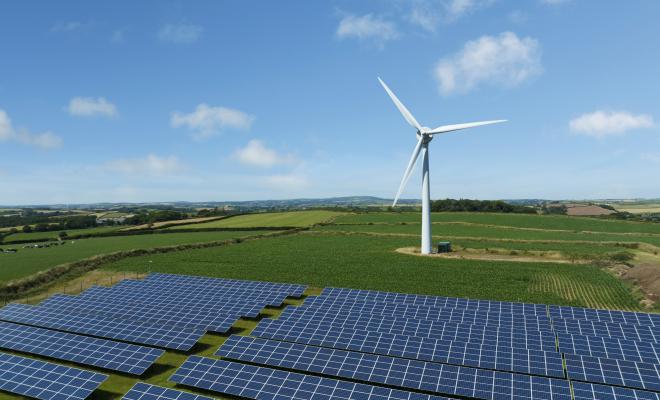
It’s also possible to combine food production and solar farms. For example, higher-mounted solar panels can share sunlight with crops below (e.g. soft fruits, potatoes etc) while also providing shade that protects the plants from increasing periods of extreme heat and water loss.
Grazing animals between solar panels is also increasingly common and delivers animal welfare benefits by providing shade. And on wind farms the turbines themselves take up less land space so that livestock grazing can be easily combined with energy generation - making for an efficient use of land.
Climate change is the real threat to farmers and food security
The UK Government’s 2021 Food Security Report stated that “The biggest risk to the UK’s domestic production comes from climate change and other environmental pressures like soil degradation, water quality and biodiversity.”
In 2024, the NFU warned of threats to farming output and the quality of crops due to high rainfall, with NFU vice president Rachel Hallos, saying that UK farmers were "on the front line of climate change - one of the biggest threats to UK food security". And in 2025 a survey by ECIU found that over 80% of farmers are concerned about the impact of climate change on their ability to make a living and the majority say extreme weather has hit their productivity.
Scrapping renewable energy, which is essential to the UK’s reduction in climate emissions, will harm, not help, our food security in the longer term.
Renewables help farmers with economic resilience
From roof top or ground mounted solar to wind turbines and battery storage, many farmers are embracing renewable energy as a way to cut their own energy costs and make their businesses more resilient. A survey of farmers by Solar UK found that those who had diversified felt more confident about their viability and that their farm would stay in the family for future generations.
The National Farmers Union also supports more renewable energy on farmland saying that many farmers and growers are looking to invest in, or increase their generation of, renewable energy. They’re calling on the government to make this easier for them, by ensuring access to rural electricity grid connections is faster and more affordable for farmers. The annual rent that a landowner could expect across the life of a windfarm project would be around £10,000/MW, plus about a third more than this as a share of the revenue generated.
Not all farmers will welcome renewables on their land - but the policies of some right-wing political parties would make it harder for those that do.
Most people support more renewable energy, and local concerns are considered in the planning process
A YouGov poll for Friends of the Earth found that 80% of respondents supported producing more UK generated energy through expanding the UK’s renewable energy infrastructure. Government surveys do show that support declines if people are asked about a wind or solar farm nearby. Overall support for solar energy is 86% but this dropped to 37% for a local wind farm and 47% for a local solar farm when asked about how happy they would be with either constructed in their local area. However, a comparison with support for a new nuclear plant nearby shows that only 21% of people said they supported construction of a nuclear power station in their local area.
Yet Reform UK and the Conservatives have both committed to fast tracking nuclear energy.
Where people are opposed to solar or wind farms, it’s often due to concerns about impacts on farmland or nature. As we’ve shown above, it's not a zero-sum game - an increase in renewables doesn't result in a threat to food security. As with any development, it’s understandable that people are concerned about impacts on nature.
Solar farms can support birds
Solar and wind farms must be located in the right place to ensure they don’t harm nature. Wind farms should avoid migratory bird routes for example. But solar farms can also improve bird diversity. The RSPB and University of Cambridge found that, managed well for nature, solar farms had more birds and a greater variety of species than nearby arable farmland. Solar farms managed for nature can boost bird numbers and biodiversity. Concerns about nature can be met by careful siting - not halting renewables projects altogether.
Why this matters
Reversing climate action by blocking new renewable energy and battery storage projects would be dangerous. There’s clear evidence that the impacts of climate change are already happening across the UK and the world and it’s often the people who’ve done least to cause it who suffer. To meet the UK’s emissions reduction targets requires an expansion of onshore renewable energy in addition to offshore.
The transition to a decarbonised economy will cost money - but it can be funded fairly by ensuring that the biggest polluters pay the most. Those with the most to lose from the transition to net zero are often the most vociferous opposition to climate action and who stand to benefit most when doubt is sown about the urgent need for it. There are significant benefits to clean energy that can improve the quality of day to day lives such as cleaner air, thriving nature, new jobs and warmer homes.
Opposing the expansion of renewable energy in favour of fossil fuels undermines investment certainty and would contribute to a dangerous increase in UK carbon emissions.
Fair solutions
Instead of throwing out the best option we have to generate cheap clean energy and improve our energy security, we should focus on putting solutions in place to make sure we take full advantage of renewable energy sources located in the right place and ensuring communities and farmers can benefit including:
- Fully switch from fossil fuels to renewable energy.
- Ensure communities benefit financially from new renewables via a discount on energy bills.
- Investment in long term energy storage.
Investment in the electricity grid - particularly in rural areas.